Volume VII · Voice automation · Backend systems
The Dispatcher's Voice
The backend beneath an outbound voice agent: campaign calling, queues, and webhooks, so a machine can make calls at scale without dropping one.
- Problem
- An outbound voice agent had to call at campaign scale without dropping calls.
- Outcome
- Queue-based campaign calling on Redis, with outcomes reported back through webhooks.
- Principal
- Dispatch product · via Zylo Technologies
- My role
- Backend engineer
- Period
- 2026
- Tech used
- Python · FastAPI · Redis · Vapi · Webhooks
Chapter 1 · The problemThe Thesis
An outbound voice agent is not a phone call; it is a distributed system that happens to speak. Its failures are queue failures, retry failures, and callback failures long before they are conversation failures.
Chapter 2 · The client & my roleThe Catalyst
A dispatch product needed an outbound Vapi voice agent to work at campaign scale. I built the backend APIs around it: campaign calling, a Redis queue, and the webhooks that close the loop.
Chapter 3 · The hard partThe Friction
Calls are asynchronous and the world on the other end is unpredictable. Lines are busy, calls drop, and results arrive later through callbacks.
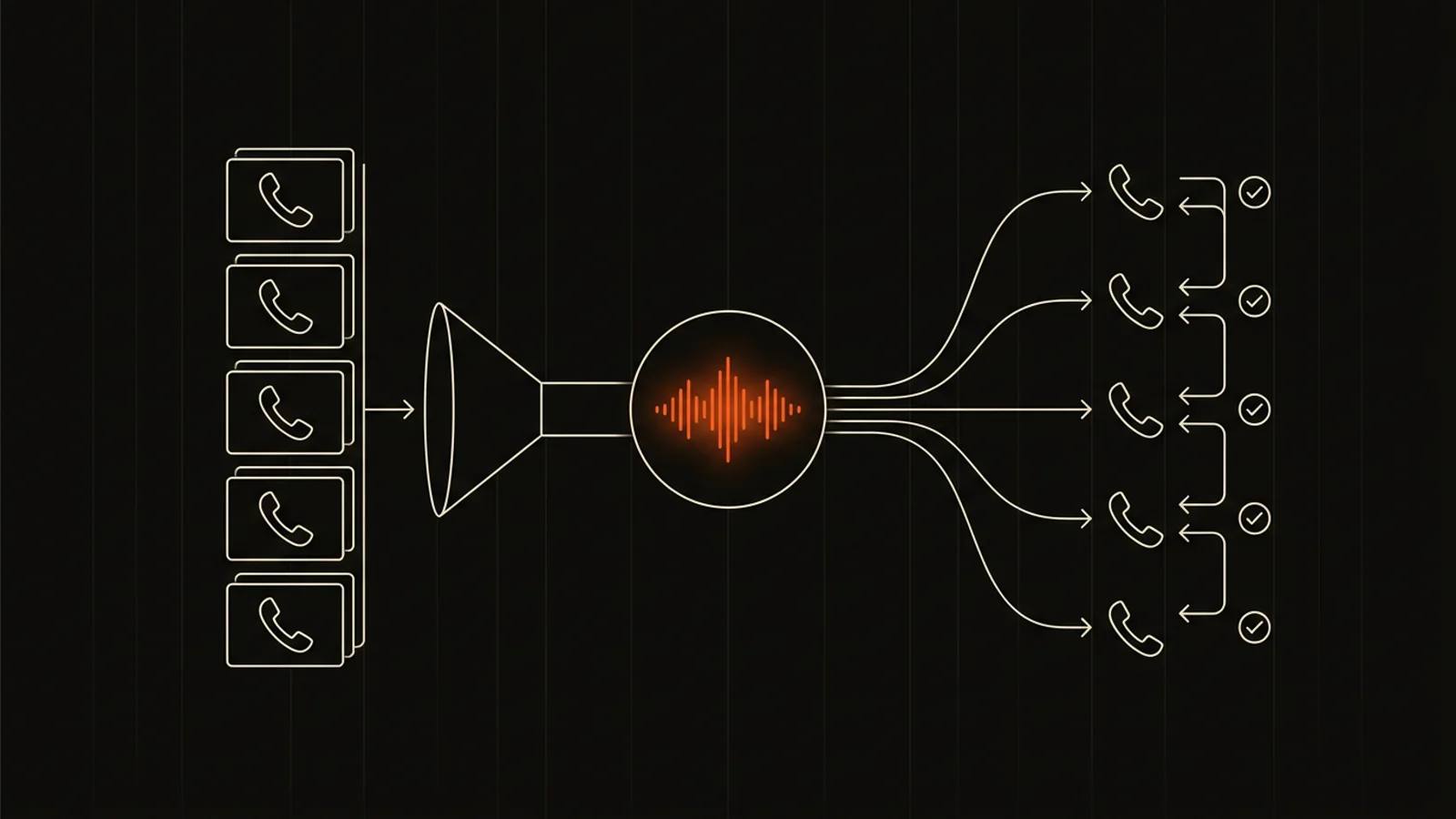
The decision was to put a queue between intent and execution. Campaigns become jobs, jobs become calls, and webhooks report outcomes back into the system rather than assuming them.
“Put a queue between what you intend and what you execute.”
Chapter 4 · The resultThe Monument
The dispatch team can launch a calling campaign as a single action, and the system absorbs the unpredictability of the phone network on its own.
- Queued
- Campaign calling on Redis
- Event-driven
- Outcomes returned by webhook
- Outbound
- Voice agent operating at campaign scale